 In the essay, "Voices of Our Foremothers: Celebrating the Legacy of African-American Woman Educators" by Sunny-Marie Birney, you understand the importance of parents sharing and reflecting their heritage on their children. The essay discusses Birney's dependency on her teachers for understanding of her African descent. She was adopted at the age of 2 by Euro-American people who could not tell her much about the culture because they weren't black. An exert states, "Similar to the unknown author of the negro spiritual Motherless Child, I too found myself "a long way from home. My adopted parents, two people of Euro-American descent, were wonderful people, but I always felt that a piece of me was missing." From this exert, Birney expressed that she loved her parents and they were great but growing up she always felt that there was a part of her missing. Why should adopting parents be of similar ethnicity of the child? Growing up and watching movies such as Raising Isaiah, I didn't understand the importance of adopting a child how had the same race as the parents. I felt that it was not a vital role in parenting. Many of the movies I watched I assumed that the parents or the adoption agencies were just prejudice and did not understand that parenting was beyond the color of someone's skin tone. But now things seem to shine in a new light. I can understand how important it is to understand where you have come from to understand where you are going. Being raised in a African-American household I have gotten the chance to experience culture traditions and festivities. This things have helped mold me into the woman I am today and will definitely have an affect on the woman and mother I will be in the future. When I do have the chance to interact with other African-American students and I find out that they don't understand the traditions and festivities I become completely shocked. I also find myself using sayings as "oh your not black" to make fun of them in a joking way. I never realized how much I characterize someones's ethnicity on their behaviors but I do. I understand that the behaviors we perform and understand reflects who we are as a people. Growing up as a child and not getting the chance to experience this must have a big toll of the life of the child. It must make them feel lost or as Birney stated, "a piece of them is missing". So now when it comes to understanding the importance of being raise in a home where similar culture beliefs and traditions are shared. As the saying goes, "In order to know where you are going, you have to know where you came from".
Showing posts with label Ebony Mason. Show all posts
Showing posts with label Ebony Mason. Show all posts
Monday, November 8, 2010
Missing A Part of You
In the essay, "Voices of Our Foremothers: Celebrating the Legacy of African-American Woman Educators" by Sunny-Marie Birney, you understand the importance of parents sharing and reflecting their heritage on their children. The essay discusses Birney's dependency on her teachers for understanding of her African descent. She was adopted at the age of 2 by Euro-American people who could not tell her much about the culture because they weren't black. An exert states, "Similar to the unknown author of the negro spiritual Motherless Child, I too found myself "a long way from home. My adopted parents, two people of Euro-American descent, were wonderful people, but I always felt that a piece of me was missing." From this exert, Birney expressed that she loved her parents and they were great but growing up she always felt that there was a part of her missing. Why should adopting parents be of similar ethnicity of the child? Growing up and watching movies such as Raising Isaiah, I didn't understand the importance of adopting a child how had the same race as the parents. I felt that it was not a vital role in parenting. Many of the movies I watched I assumed that the parents or the adoption agencies were just prejudice and did not understand that parenting was beyond the color of someone's skin tone. But now things seem to shine in a new light. I can understand how important it is to understand where you have come from to understand where you are going. Being raised in a African-American household I have gotten the chance to experience culture traditions and festivities. This things have helped mold me into the woman I am today and will definitely have an affect on the woman and mother I will be in the future. When I do have the chance to interact with other African-American students and I find out that they don't understand the traditions and festivities I become completely shocked. I also find myself using sayings as "oh your not black" to make fun of them in a joking way. I never realized how much I characterize someones's ethnicity on their behaviors but I do. I understand that the behaviors we perform and understand reflects who we are as a people. Growing up as a child and not getting the chance to experience this must have a big toll of the life of the child. It must make them feel lost or as Birney stated, "a piece of them is missing". So now when it comes to understanding the importance of being raise in a home where similar culture beliefs and traditions are shared. As the saying goes, "In order to know where you are going, you have to know where you came from".

Thursday, October 21, 2010
"Don't Bite the Hand that Feeds You"
 In the essay, “Black and on Welfare: What You Don’t Know About Single-Parent Women” by Sandra Golden, it explains the lifestyles of black women who struggle with welfare. In the essay Golden states, “The study’s participants noted that they were not against the welfare reform law, rather they resented the discriminatory treatment from their self-sufficiency coaches (SSC)… the disrespect was a manifestation of public assistance are uneducated and lazy.” This statement posed a question in my mind that wonders whether what she studied in her participants is really the causing factor to their disrespect. When it comes to the respect that should be given from a “SSC” to a welfare participate should it be based on their education and personal behavior or simply should it be reflected from the respect given? From a personal viewpoint I have interacted and I am acquaints to black women on welfare. In observing their behavior and attitude towards people, majority of the women have a negative attitude to others. How can they expect someone to fully apply themselves in assisting you with the help you need if they treat have a bad temper? To a certain extent I can understand why some of the SSC may treat the women with less respect and it is because they earned it. Many of the women who struggle with financial issues that are single mothers have so much anger bottled up in them that they began to take it out on the people around them, especially those that may be in better situations than them. Another thing to be mindful of is that many people have to depend on social services for assistance and it has nothing to do with their education. Some people who might have college degrees may be in the same predicament as someone who has a GED but that does not mean they should be treated with a higher degree of respect. It does not matter where they came from or what they have done in the past but it is where they are now. That now is being a single mother on welfare needing help and guide to have the ability to provide for herself and her children. Some of these women believe that the people that are helping them are obligated to help them and that is not true. They need to learn how to be respectful and not bite the hand that feeds them, while in this case help them. You do not need a high school diploma to understand the importance of manners, that should be a given. I can understand Golden’s point as well as the participants with believing that a lot of mistreatment is rooted from the societal stigma that all black women on welfare are uneducated and have the “welfare mentality”. Some women who are mannerful are treated disrespectful because of that stereotype. Some "SSC" workers like to catergorize everyone in a certain catergory but not all. If you take the time to think about it, a lot of the SSC workers chose that job because they have a passion to help others in need not because they were stuck with it. So their focus is to provide the support that their participants need not to treat them with disrespect.
Thursday, September 23, 2010
Finding Your Purpose Through God
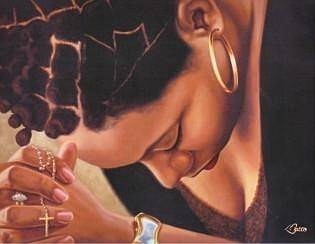 In “Going against the Grain” by Jacqueline Jones Royster, the writing vividly express the strength of Black women and their fight to strengthen their race’s and gender’s literacy. In particularity she titles a piece of her work, “Coming to Voice: Maria W. Stewart, a Case in Point,” in which it explains how Maria Steward became a political and economic activist speaker. Maria Steward became such a prominent pioneer in public speaking for black women all because of her obedience to God and her gift of encouraging women and blacks to take a stand for their equality. Before becoming a public speaker, Maria Steward lost her husband along with everything that he possessed. Because she was black and a woman, she was not given justice in turns of what belonged to her. Her husband’s white business colleagues took everything that she owned and left her with nothing. In the text it states, “She chose to cling to her spiritual beliefs, finding a strength and solace that compelled her to confess publicly her faith in Christ. . . Stewart had the desire to speak out publicly about discrimination and injustice and about the need for political and economic activism.” In this quote, we discover that Steward found out who she really was and her purpose by finding God. In learning about her life I found it amazingly beautiful that beyond all that she went through she found someone who has always been there for her: God. She began to realize that all that she is and is capable of doing is all due to God’s purpose for her. As a Christian and reflecting on this the first question that comes to mind is: Why is it that we forget who God is and that he is the created of all that is and all that will come? I feel that for some people just was with Maria, we will begin to recognize God’s presence when we lose something that we admire or love that blocks out everything else. When that opaque object, that blocks our vision, is gone or lost out vision begins to increase. We are now able to see the things that were there in the beginning. When Stewart began to see God, she began to see herself and what she was able to do. She was no longer living in her husband’s shadow but she began to make her own footprints. She began to understand that without God, she wouldn’t have the strength that she possessed to not only make her better but to make the lives of others better!
Tuesday, August 31, 2010
Why use a "Guide to Living an American Life" When You Are an African American?
In the text, “To Protect and Serve: African America Female Literacies” by Elaine Richardson the idea of women expressing themselves through literacy is highly supported. Having literature that not only reflects an African American’s point of view but an African American woman’s point of view is needed for the domestic world. In the article Richardson states, “African women controlled the domestic sphere. The women took care of their own children as well as others.” Having the accessibility of African American literature builds a black women’s knowledge of the importance of how to be a nurturer and protector. In this article, Richardson explains through the additions of other text, the struggle and debate African American women have when it comes to telling their story. White supremacists have a great influence on today’s society that they somehow convince black women today that the lives that their ancestor’s have fulfilled were meaningless. Women seem to have a sense of being story tellers. In particular, elders such as grandmothers and great grandmothers have a passion for telling stories of their past. These stories are not told just so they can have something to do or more or less be entertained in with the company of another but it is to be heard. Our African American mothers and grandmothers have such meaningful and life-fulfilled experiences that need to be share and embedded into our minds so that we will never forget. We shall never forget who we are or where we came from. Listening and learning from African American literacy reminds us of who we are and what are responsibilities are as African American women. As the article is title, we have to protect and serve! Not by the American terms of our country but for our families and your legacy. From my personal experience, listening to the lo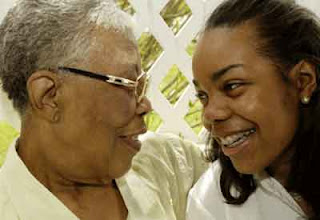 ng and dragging but above all interesting stories and experiences of my grandmother and mother, I have realized by purpose in life. “Should we respect our language and ways of knowing as little girls or in our homes as we develop into women? Or should we gradually have our minds erased with each passing year of formal school?” This quote taking from the article raises an important question. I believe we shouldn’t. If we let the American literature control our thinking and lose our knowledge that we have gained from our African American women we will be nothing. Think about it. A doctor can’t read the manual of an architect to do its work and we as African American can’t be filled with the “Guide to Living an American Life” to understand our purpose and who we are as African American women who protect and serve!
ng and dragging but above all interesting stories and experiences of my grandmother and mother, I have realized by purpose in life. “Should we respect our language and ways of knowing as little girls or in our homes as we develop into women? Or should we gradually have our minds erased with each passing year of formal school?” This quote taking from the article raises an important question. I believe we shouldn’t. If we let the American literature control our thinking and lose our knowledge that we have gained from our African American women we will be nothing. Think about it. A doctor can’t read the manual of an architect to do its work and we as African American can’t be filled with the “Guide to Living an American Life” to understand our purpose and who we are as African American women who protect and serve!
Subscribe to:
Posts (Atom)